Reviewed in November 2026. Tabarca village is a rare case in the Mediterranean: a small walled town built in one go in the 18th century, on a grid plan, to house families of Genoese origin. Today it is the heart of the island and can be explored on foot in a short time. Here is what not to miss.
An 18th-century fortified village
For centuries the island was uninhabited and used as a hideout by Barbary corsairs. In 1769–1770 Charles III had it fortified and settled with the families from Tabarka (Tunisia) whom he had ransomed from captivity in Algiers. Military engineer Fernando Méndez de Ras designed the walls and the layout of the village. For the full story, read the history of Tabarca.
The whole site is protected as a Site of Cultural Interest (Bien de Interés Cultural).
What to see in Tabarca village
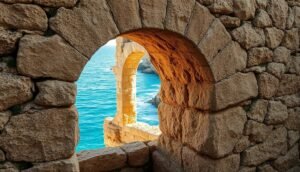
- The walls and gates: they surround the village and much of them can be walked. Gates such as the Levante gate, also called San Rafael, are still standing.
- The church of San Pedro y San Pablo: an 18th-century church inside the walls.
- The Governor’s House: once the residence of the island’s military authority, now a hotel.
- The Nueva Tabarca Museum: housed in the old tuna-fishery (almadraba) warehouse, it covers the island’s history, fishing and the marine reserve. More in the Nueva Tabarca Museum.
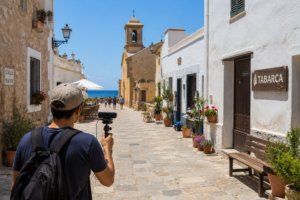
- The grid of streets: low whitewashed houses with colourful doors and windows, perfect for a quiet stroll.
- San José Tower: outside the village, in the open countryside of the island. In the 19th century it was used as a state prison.
How to explore the village
The village sits at the western end of the island, next to the harbour where the boats arrive. There are no cars on the island, so everything is done on foot. A walk along the walls, the church and the main streets takes a little over an hour with stops; add the museum and the path to San José Tower and allow half a day. More in how long it takes to explore Tabarca.
Eating and sleeping in the village
Most restaurants are in the village and along the harbour. The signature dish is caldero tabarquino, a rice dish with rock fish. If you want to stay overnight, there are few beds and it is best to book well ahead: see where to stay in Tabarca.
Who lives in the village
Tabarca has very few year-round residents, many of them descendants of those Genoese families, with surnames such as Parodi, Ruso, Chacopino or Luchoro. In summer the village fills with day visitors; out of season it returns to its quiet pace. Learn more in who lives on Tabarca.
Tips for visiting the village
- Come early or late in the day in summer: at midday the streets are crowded and it is very hot.
- Wear comfortable shoes: some stretches are cobbled or dirt.
- Respect the residents: it is a lived-in village, not an open-air museum.
- Plan your return: check the time of the last boat in how to get to Tabarca.